
01
The view of the sky
Trees in full leaf, chimneys, neighbouring houses and hills can all block part of the sky. We check in the app and look at what will grow or be built over time.
We pick the position with the fewest obstructions.
Satellite broadband, properly fitted
Bought a Starlink kit but don’t want it sitting on the lawn? We mount the dish high on the roof, chimney, wall or a pole with a clear view of the sky, run the cable neatly into the house and set up Wi-Fi where you actually need it.
Lines open Mon–Sat, 8am to 6pm
Tap to speak to your local engineer
01483 789110How it works
Step 1
Call or WhatsApp with your postcode, which Starlink kit you have, and a photo or two of the house and garden.
Step 2
Your engineer runs the obstruction check from the likely positions and agrees the best one with you.
Step 3
The dish is mounted and secured, and the cable run neatly into the house, with the price agreed before we start.
Step 4
We connect the router, check speeds and coverage in the rooms that matter, and show you around the app.
Why fit it properly
Starlink is satellite broadband from a large network of low Earth orbit satellites. Unlike a TV dish, which points at one fixed satellite, the Starlink dish tracks satellites moving across the sky, so it needs a wide, open view rather than a single line of sight. Here in the UK, the northern part of the sky matters most.
That’s why where the dish goes makes such a difference. On the ground or a low wall, trees, the house itself and neighbouring buildings get in the way, and each obstruction causes a short drop-out. You might not notice it when browsing, but you will on a video call, an online game or a live stream.
Our engineers already spend their days on Surrey and Berkshire rooftops fitting aerials and satellite dishes. We use the Starlink app’s obstruction check to compare positions before drilling a single hole, then mount the dish where it gets the clearest sky and the shortest, tidiest cable route into the house.
Starlink services
You buy the Starlink kit and subscription direct from Starlink or a retailer. We do the part that makes it work well: the survey, the mounting, the cabling and the Wi-Fi.
We check obstructions from several spots on the roof, walls and garden using the Starlink app, then recommend the position that gives the clearest view of the sky.
Dishes fixed on a pole mount, chimney bracket or ridgeline mount, high above trees and roof lines, secured for exposed and windy sites.
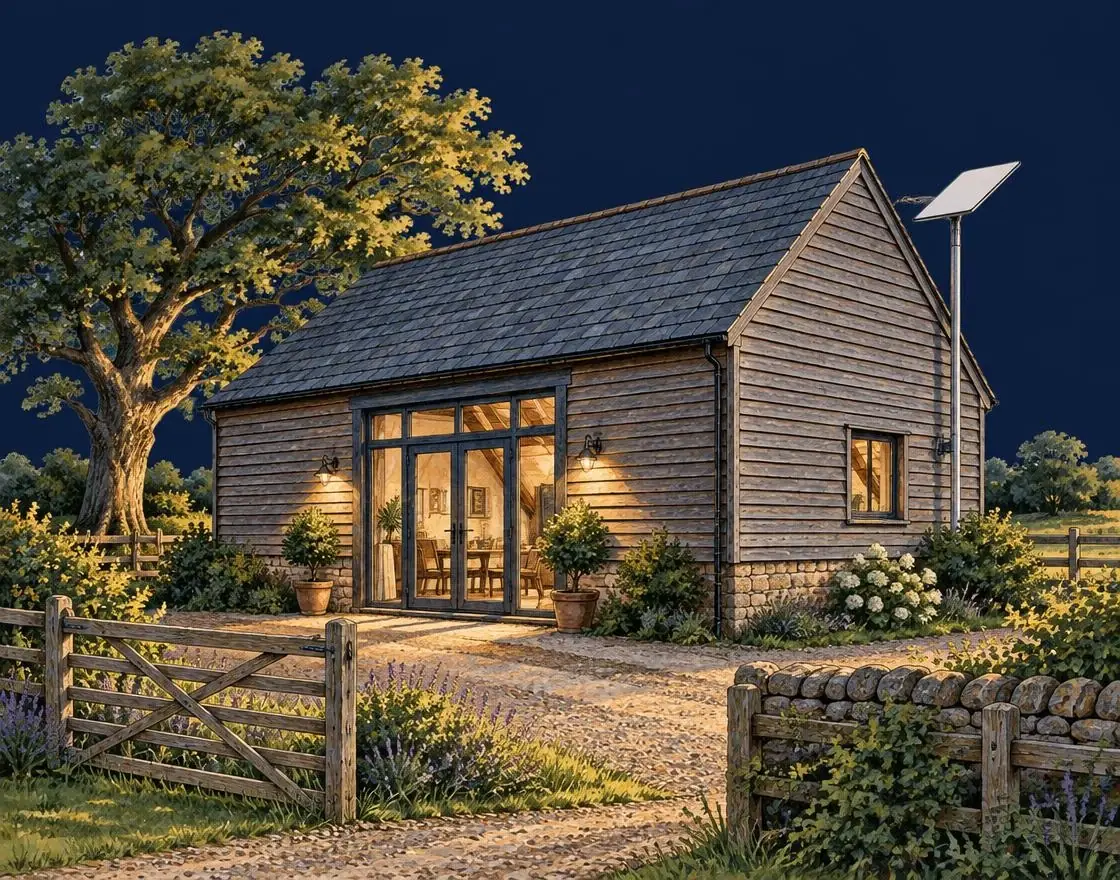
Gable-end, wall and freestanding pole mounts where a roof position isn’t suitable, including on outbuildings, barns and garden offices.
The cable clipped neatly, sealed where it enters the building and run inside to the router position, without trailing wires through an open window.
The router placed for the best coverage, with mesh units or a wired connection to the home office, garden room or far end of the house.
Dishes moved from a temporary spot to a permanent mount, repositioned after new obstructions, or checked when drop-outs start to creep in.
Getting it right
A good installation is mostly decided before any drilling starts. These are the four things we look at on every job.
Trees in full leaf, chimneys, neighbouring houses and hills can all block part of the sky. We check in the app and look at what will grow or be built over time.
We pick the position with the fewest obstructions.
Chimneys, rendered walls, brick, timber cladding and roof tiles all need different fixings. Exposed sites need extra bracing against the wind.
We use the right bracket and fixings for the surface.
The supplied cable has a set length and isn’t designed to be cut and re-terminated, so the dish position and router position have to work together.
We plan the route before the dish goes up.
One router by the front door rarely reaches the whole house, especially with thick walls, extensions or a garden office.
We place the router and add mesh or cabling where needed.
Good to know
If you can get full fibre to your door, it is usually the cheaper and faster choice. Starlink comes into its own where the only wired option is slow copper broadband, which is still the case in many villages and on farms across the Surrey Hills, the North Downs and rural Berkshire.
It is also popular as a backup line for home workers and small businesses who can’t afford to be offline when the local broadband goes down.
No, but higher is usually better. A dish on the lawn or a low bracket can work in an open field. In a garden with trees or close neighbours, lifting it above the roof line is often what turns frequent drop-outs into a steady connection. Wall and pole mounts are a good middle ground.
Yes. Streaming services work over Starlink like any other broadband. Many of our customers keep their TV aerial or Freesat dish for live TV too, so they have a picture even if the internet drops. We can check your aerial on the same visit.
Starlink is a trademark of SpaceX. Guildford Aerial Solutions is an independent installer and is not affiliated with Starlink or SpaceX. Kits and subscriptions are bought direct from Starlink or an authorised retailer.
Local Starlink installers
Our engineers cover towns and villages across Surrey, Berkshire and the Hampshire border. Pick your town to see the TV and broadband services we offer locally.
No. You buy the kit and subscription direct from Starlink or an authorised retailer, so the warranty and account are in your name. We survey, mount, cable and set it up.
We install the Starlink Standard and Mini kits for homes and businesses, using Starlink mounts or a suitable pole, wall or chimney bracket for your property.
Most homes are done in a few hours, including the sky check, mounting, cabling and Wi-Fi set-up. Long cable runs or outbuildings can take longer.
Yes. Many people start with the dish on the lawn or a garden table, then find trees cause drop-outs. We move it to a permanent, higher mount.
Usually not for a single small dish on a house, but limits apply in conservation areas, on listed buildings and on some roof positions. We’ll tell you if you should check with your council first.
Very heavy rain can briefly slow the connection. The dish is built to live outdoors and can warm itself to melt snow. The bigger risk in a storm is a poorly fixed mount, which is why we brace dishes properly on exposed roofs.
Yes. We can run a wired connection or set up mesh Wi-Fi so your garden office, annexe or workshop gets a strong connection.
We can check your aerial or satellite dish, or wall-mount the TV, on the same visit.
Guildford Aerial Solutions
Tell us your postcode and which kit you have, and we’ll take it from there.